

The test for the AU-EU partnership is no longer whether both sides can agree on priorities. It is whether they can act on a short list of them.
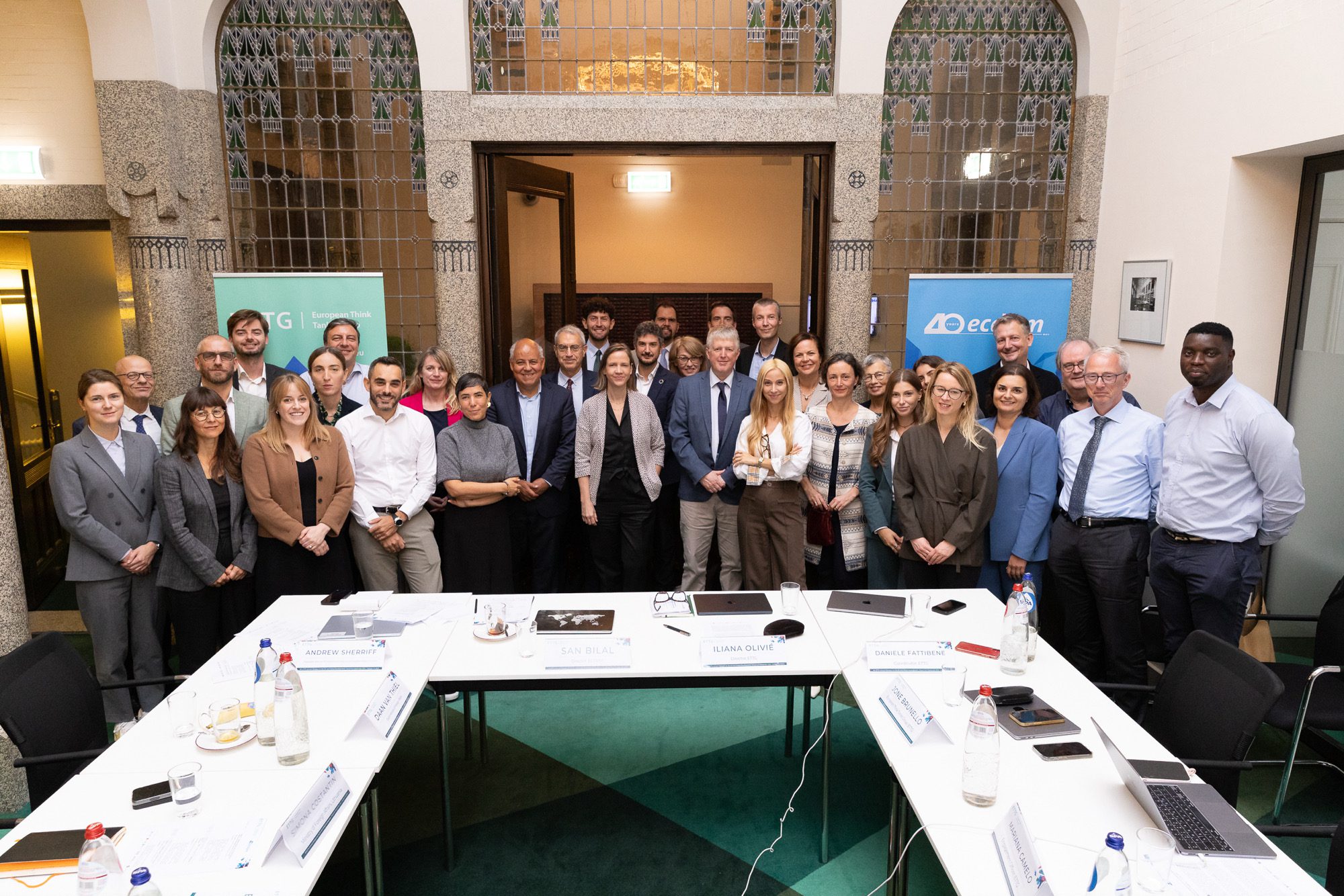
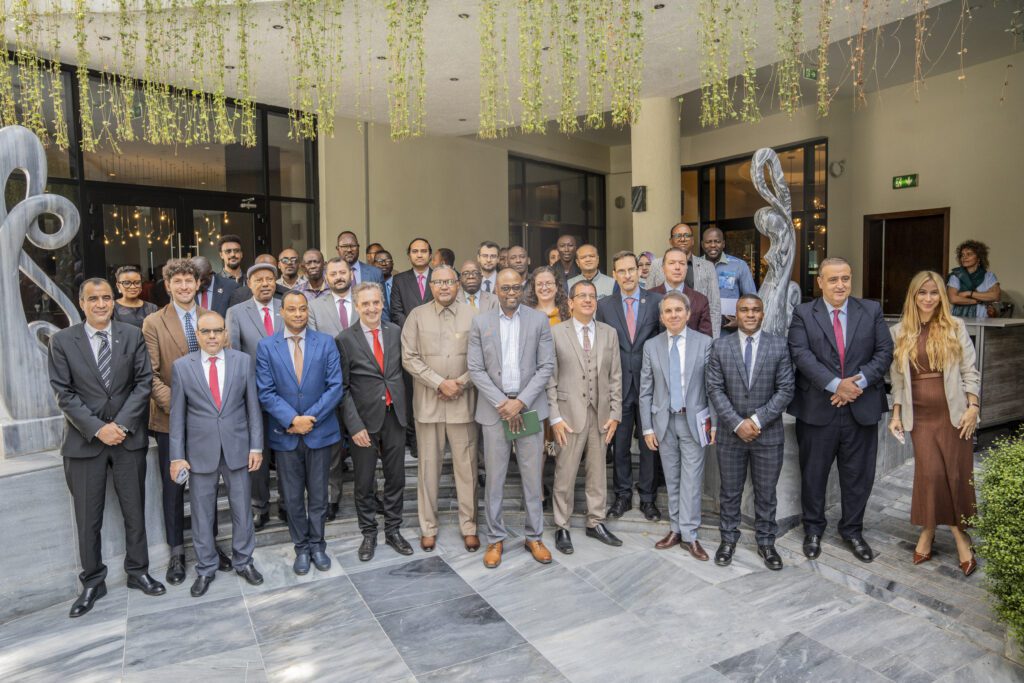
That was the premise of our closed-door roundtable in Addis Ababa on 18 November, co-organised by with the Institute for Security Studies (ISS Africa).
Around 50 senior participants joined us including Ambassadors from over 20 countries worldwirde, officials from the AU Commission and the EU, think tanks, academics and civil society from both continents. Discussions were held under the Chatham House Rule.
The meeting closed a three-year ETTG project, supported by the Open Society Foundations (OSF), with consultations in Accra, Brussels, Dakar, Johannesburg, Nairobi and Rabat. It also hosted the launch of OSF’s Africa-Europe Strategy.
A world of multipolar fragmentation, intensified strategic competition and strained multilateral institutions leaves little room for a partnership run on habit. Europe and Africa share geography, history and deep economic interdependence. Yet the relationship is still too often marked by strategic friction, missed opportunities and a perceived asymmetry in who sets the agenda.
Convening in Addis Ababa, the diplomatic capital of the continent, was a deliberate choice. So was the co-design with ISS Africa, which anchored the event locally and served as the main liaison to the AU Commission. The aim was a neutral, balanced space in which European and African decision-makers could speak candidly, without the perception of European agenda-setting.
The agenda followed the three themes on which the project has built its recommendations.
Peace, security and governance. After the opening fireside conversation on navigating global realignment, the first working session turned to the AU-EU peace and security framework. The hard question is why rising military spending in Africa has not bought greater security. Our collective report argues that lasting stability depends on tackling governance failures, economic exclusion and climate stress. It also argues that bilateral defence arrangements should reinforce the African Peace and Security Architecture rather than bypass it.
Skills, mobility and migration governance. The second session asked how to co-develop skilled labour mobility alongside sustainable value chains. The demographic logic is plain: Europe is ageing while Africa’s workforce is expanding. The politics are harder. Our work points to reducing administrative friction in existing legal channels, mutual recognition of qualifications, and ethical recruitment that protects critical African sectors, health above all.
Just energy transitions, critical minerals and industrialisation. The third theme concerned equitable value chains: local processing, local jobs and green industrial finance on equal terms. The shared challenge is to move from extraction to value creation. That starts with agreeing what “clean”, “critical” and “mutually beneficial” actually mean on each side of the table.
The same obstacle ran through all three pillars: the gap between declared ambitions and delivery. The project’s conclusions put it plainly. The partnership needs shared rules, a shared dictionary of key concepts, and candour about trade-offs and timelines.
The closing session therefore did not seek another comprehensive wish list. It was designed to surface points of consensus, identify the three to five priority areas where cooperation can realistically move, and outline next steps for institutional advocacy.
Three years of dialogue have produced a body of joint work, from the “Cairo to Luanda” parliamentary reflections to the collective report Sailing in Lightning and the OSF Africa-Europe Strategy. The task now is to carry it into the institutions that can act on it: the AU Commission, the European Commission and EEAS, the two parliaments, the regional economic communities, and the think tanks and civil society organisations that keep the pressure on.
Read the ETTG collective report: https://ettg.eu/interest-driven-eu-africa-partnership/