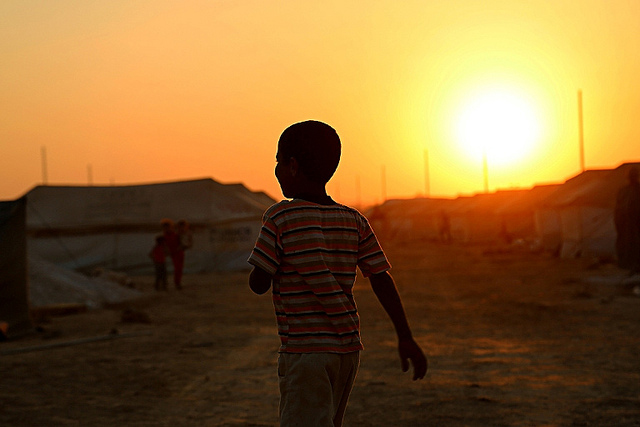
Migration is a local reality. People may migrate voluntarily, but migration can also be an imperative necessity. Approximately 30 million people are currently considered refugees or internally displaced people, two-thirds of whom live in urban areas. Forced migration and refugee inflows into cities are taking place within the broader context of global urbanisation. And large camps such as Zaatari in Jordan and Dadaab in Kenya are increasingly considered as cities in their own right.
KEY MESSAGES
- Temporary displacement should be thought of as long term
- Most displaced people and refugees live in towns and cities – either because that is where they have moved, or because long-term camps become like towns.
- Both humanitarian and development actors need to engage more forcefully with the urban aspects of displacement.
- The private sector will be at the heart of a comprehensive response, and will need new norms, standards and regulation.
- The EU has set a progressive policy framework and now needs to deliver.
Read the full paper here.
Authors: Giulia Maci, San Bilal, Anna Knoll and Eva Dick
Image courtesy of Kinnie van Eeden via Flickr.