
December 2025
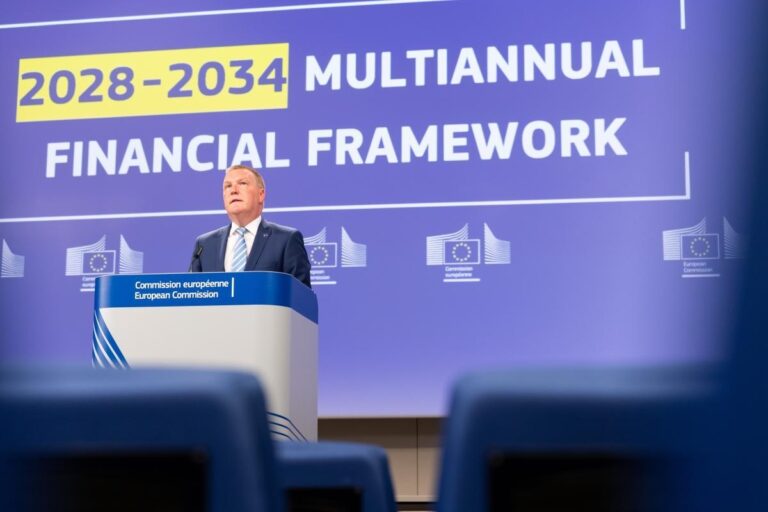
The European Commission’s proposal for a Global Europe Instrument (GEI) under the 2028–2034 Multiannual Financial Framework marks a pivotal shift in how the EU intends to fund its external action. Designed to align development cooperation more closely with Europe’s own competitiveness and security, the GEI aims to streamline tools and increase flexibility in an era of global volatility. However, under tight fiscal constraints, maintaining this level of ambition will require a delicate balancing act.
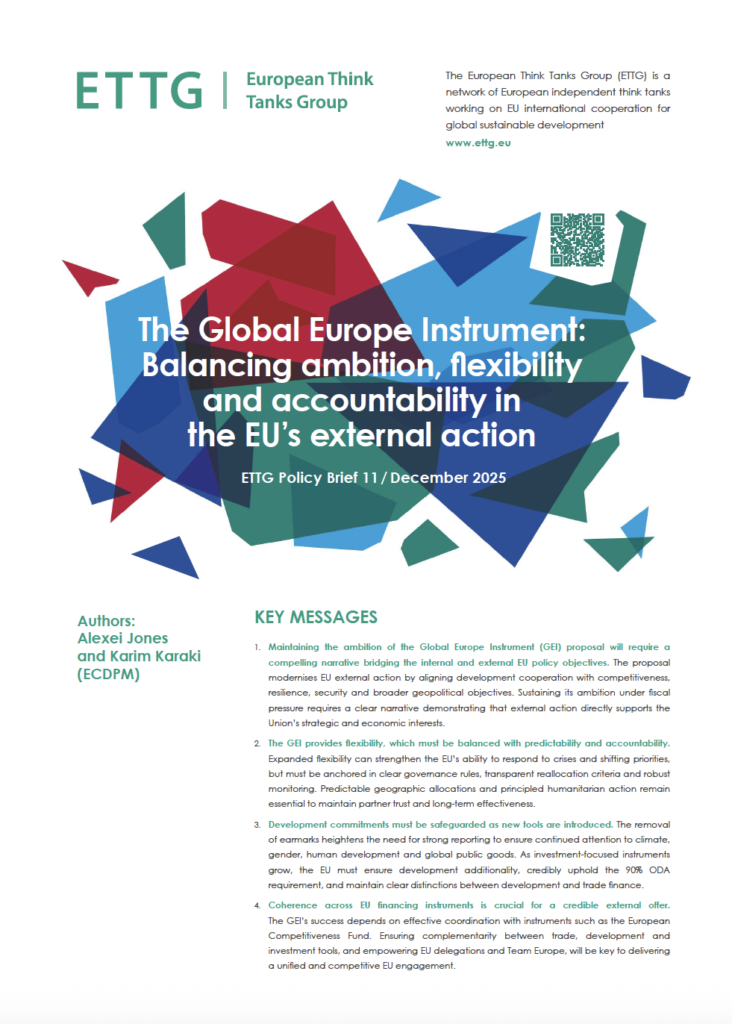
Based on the 4th ETTG Annual Dialogue (Paris, October 2025), this policy brief titled “The Global Europe Instrument: Balancing ambition, flexibility and accountability in the EU’s external action” by Alexei Jones and Karim Karaki (ECDPM) analyses the opportunities and risks of the proposal. It explores the tension between the need for agility in crisis response and the necessity of predictable, long-term partnerships with the Global South.
Key Issues & Recommendations
- The “Ambition” Challenge: To protect the external budget from cuts, the EU must craft a narrative that proves external action is a strategic investment in Europe’s own resilience, not just charity.
- Flexibility vs. Accountability: While the removal of thematic earmarks allows for faster crisis response, it risks diluting focus on climate, gender, and human development. Robust reporting mechanisms are essential to safeguard these commitments.
- A New Investment Toolkit: The GEI introduces tools like direct grants to the private sector and guarantees for export-credit agencies. The authors argue that while this boosts competitiveness, the EU must credibly uphold the 90% ODA requirement to avoid blurring the line between development and trade finance.
- Coherence is Key: Success depends on how well the GEI interacts with internal tools like the European Competitiveness Fund. A unified financial offer is the only way to project credible EU influence abroad.
Read the full analysis and recommendations here.
Picture © European Union 2022 – Source: EP