
Publications 

ETTG offers analysis and evidence-based discussions on all aspects of development cooperation. Outputs range from blogs, policy briefs and collective reports to informal takeaways from network events.

European independent think tanks

The six institutes that compose ETTG cover all aspects of international development and cooperation policy.. They share a strong commitment to higher global welfare, and a strong belief in the importance of better collective action to achieve global goals. As think-tanks, and as policy-focused research institutes, they also share a commitment to effective outreach and engagement with policy-makers and policy processes.

Generic selectors
Exact matches only
Search in title
Search in content
Post Type Selectors
Category

Latest

Laying the foundation for a solid AU–EU partnership 

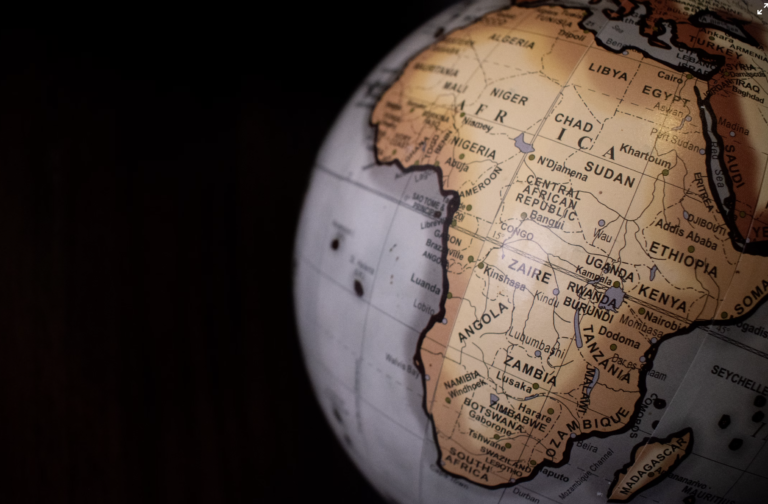
European Think Tanks Group (ETTG), the Institute for Security Studies (ISS) and the United Nations Development Programme (UNDP) joined forces to analyse divergences and seek consensus between the AU and the EU on key issues in the partnership. Drawing on roundtable discussions with experts from Africa and Europe, the group produced a series of policy briefs with proposals to strengthen the partnership between Africa and the EU on green transformation and climate change; economic development and trade; and participatory governance, peace and security. The briefs draw on contributions from more than 70 leading African and European independent experts, knowledge centres and think tanks that contributed reflections and suggested concrete policy recommendations. 

Read more >

The sixth EU-AU Summit: Partners in therapy?

Summits are an inevitable part of the international relations game. But each and every time they end up in disappointments because expectations were too high or longstanding frustrations and irritants on both sides were not openly addressed. To break with this pattern, the partnership should move from an asymmetrical top-down relationship to a more horizontal partnership where both parties negotiate deals on the basis of trust and mutual respect.

Read more >

Governing planetary health. On the right to a safe, clean, healthy and sustainable environment.

Geopolitics has an important role to play in securing the health of both people and planet. Indeed, businesses cannot be asked to govern the planet’s health if some of the most polluting countries in the world are not on board. Successful governance of planetary health depends on geopolitics and cross border implementation. It also demands that special attention be paid to the interlinkages between businesses, environmental justice and inequalities. All of these are crucial to advance the universal right to a safe, clean, healthy and sustainable environment.

Read more >

The proof of the haggis: Making sense of the Glasgow climate change conference

In spite of all the anger and frustration that was palpable especially during the final iterations of the Glasgow cover decision, it would be too bleak to consider COP26 as a mere waste of time and effort. Much rather, the Glasgow package delivered a hefty lump for all Parties to chew on. As of now, it remains hard to tell how palatable individual Parties will find their haggis once they take it to their domestic tables. But if they now act even upon the half-hearted words of the Glasgow Climate Pact, the implementation of the Paris Agreement could finally gain traction. Ultimately, the proof of the haggis will be in the eating.

Read more >

‘Global Britain’, Africa and Europe

Africa is a missing piece of the ‘Global Britain’ jigsaw, one that needs to be put in place. And it is a continent where Britain needs to work not only with African countries but with European ones too. This requires a more positive relationship with both.

Read more >

Supporting developing countries for a global sustainable recovery: lessons from the Italian G20 Presidency

A series of high-profile events has added up to making 2021 a crucial year to tackle the global sustainable development agenda and present a unique opportunity to drive a virtuous circle of political commitment, regulation, and financial flows towards sustainable recovery in developing countries, which is a key issue of this year’s G20 cycle. Bringing the voice of developing countries in the global multilateral agenda is not easy to tackle due to different and often competing political priorities. This blog draws lessons from the Italian G20 Presidency to inform the development policy considerations and efforts of the upcoming Indonesian, Indian and Brazilian G20 Presidencies. These Presidencies have a great potential to prioritize sustainable recovery in the Global South in their own, as well as in cooperation with the G7 and EU Presidencies when appropriate.

Read more >

Sign up
for our newsletter 

Scroll to Top