Publications 

ETTG offers analysis and evidence-based discussions on all aspects of development cooperation. Outputs range from blogs, policy briefs and collective reports to informal takeaways from network events.

European independent think tanks

The six institutes that compose ETTG cover all aspects of international development and cooperation policy.. They share a strong commitment to higher global welfare, and a strong belief in the importance of better collective action to achieve global goals. As think-tanks, and as policy-focused research institutes, they also share a commitment to effective outreach and engagement with policy-makers and policy processes.

Generic selectors
Exact matches only
Search in title
Search in content
Post Type Selectors
Category

Latest

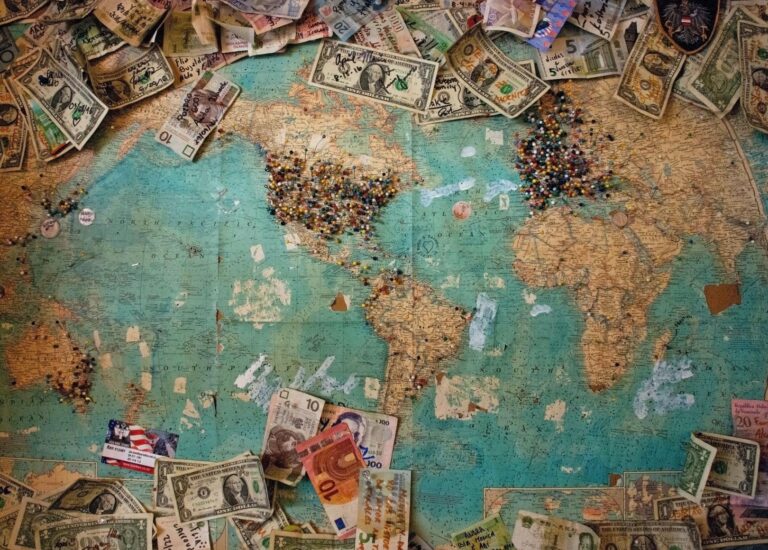
Supporting developing countries for a global sustainable recovery: lessons from the Italian G20 Presidency

A series of high-profile events has added up to making 2021 a crucial year to tackle the global sustainable development agenda and present a unique opportunity to drive a virtuous circle of political commitment, regulation, and financial flows towards sustainable recovery in developing countries, which is a key issue of this year’s G20 cycle. Bringing the voice of developing countries in the global multilateral agenda is not easy to tackle due to different and often competing political priorities. This blog draws lessons from the Italian G20 Presidency to inform the development policy considerations and efforts of the upcoming Indonesian, Indian and Brazilian G20 Presidencies. These Presidencies have a great potential to prioritize sustainable recovery in the Global South in their own, as well as in cooperation with the G7 and EU Presidencies when appropriate.

Read more >

The Covid-19 Crisis and the Mediterranean Basin: Overcoming Disparities, Promoting Genuine Cooperation

The race to battle Covid-19 and secure personal protective equipment, ventilators and vaccines, aggravated by both nationalist monopolistic policies and the rise of new variant strains, has highlighted the vital need for global cooperation. Current transnational policies exacerbate existing disparities across Mediterranean states in a context where the European Union is struggling to meet its own healthcare-related needs and many countries in North Africa and the Near East are burdened with economic hardships and internal strife.

Read more >

Supporting the Global South in tackling climate change: where is the G20 heading?

A recent IAI study has argued that several shortcomings in the climate and development finance systems undermine the capacity of countries in the Global South to tackle climate change¹. Insufficient resources, lack of focus on adaptation, inadequate management of climate risks, the vicious circle between indebtedness and climate vulnerability are some of the major obstacles.

Read more >

G20 ministerial meetings: high-time for development and finance ministers to work hand in hand for a sustainable global recovery

On 29 June, G20 Ministers responsible for development policy convened for the first time under the Italian Presidency. The meeting saw the adoption of a detailed and ambitious policy communique that in addition to prompting international action is also expected to further inform the deliberations of other G20 ‘tracks’ that may affect developing countries. It seems particularly strategic to us that the meeting of Finance Ministers at the end of this week in Venice picks up and further develops on these commitments.

Read more >

Europe–Africa Connectivity Outlook 2021: Post-Covid-19 Challenges and Strategic Opportunities

The European Union stands at a critical junction in the international scramble to establish Europe–Africa commercial corridors. Morocco, Algeria and Egypt are the geopolitical gatekeepers in the competition for three emerging corridors: Morocco’s West Africa–Western Europe corridor, an Algeria-anchored Central Maghreb corridor and an Egypt-based East Africa-Eastern/Central Europe corridor. Undeterred by the Covid-19 pandemic, China, Russia, Turkey and the Arab Gulf states have expanded their economic investments in these countries, reshaping the configuration of the trans-Mediterranean corridors

Read more >

A new multilateralism for the post-COVID world: What role for the EU-Africa partnership?

Multilateralism has been in trouble for a while, particularly​ ​at the global level. Yet, the European Union (EU) and its​ ​member states have remained among its staunchest​ ​supporters.​I​n their June 2019 Council Conclusions, EU​ ​leaders drew the outlines of a common European vision to​ ​uphold, extend and reform the multilateral system. Against​ ​an increasingly complex and contested geopolitical​ ​backdrop, these goals were further developed in the​ ​recent EU Communication on Multilateralism, published in​ ​February 2021.

Read more >

Sign up
for our newsletter 

Scroll to Top