December 2025
The multilateral system is not collapsing, but it is fragmenting under the weight of shifting geopolitics, a crisis of trust, and a widening gap between stated values and actual practice. In this volatile context, the European Union, traditionally the system’s staunchest supporter—struggles to adapt its strategy and shape a coherent reform agenda.
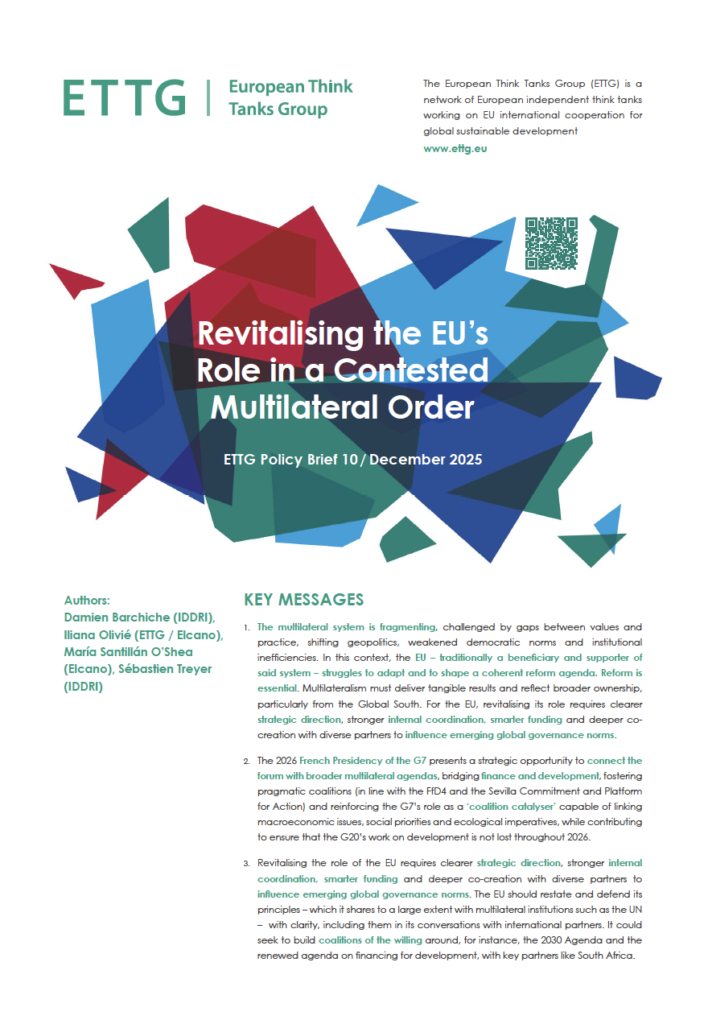
Based on the 4th ETTG Annual Dialogue on the EU and Global Development (Paris, October 2025), co-organised with IDDRI, this policy brief synthesises the debates of 27 high-level participants, including policymakers, international organisations, and experts. The brief argues that for the EU, “muddling through” is no longer an option. Revitalising its role requires clearer strategic direction, stronger internal coordination, and a willingness to engage in “uncomfortable conversations” about the redistribution of global decision-making power.
Authored by Damien Barchiche (IDDRI), María Santillán O’Shea (Elcano), Iliana Olivié (Elcano), Sébastien Treyer (IDDRI), the brief identifies the 2026 French Presidency of the G7 as a critical window of opportunity. It posits that the G7 must evolve from an exclusive club into a “coalition catalyser” capable of bridging the gap between finance and development.
Key Messages & Recommendations include:
- Diagnosing the Crisis: The crisis of multilateralism is not necessarily one of principles, but of application and legitimacy. The EU must move beyond rhetorical support for the UN and define exactly what it expects from a reformed system.
- The G7 as a Connector: Situated between South Africa’s G20 Presidency (2025) and the UK’s (2027), the French G7 Presidency must act as a bridge, ensuring that the G20’s work on development is not lost.
- Pragmatic Deliverables: The G7 should focus on concrete value-add areas, specifically enhanced coordination between Multilateral Development Banks (MDBs) and National Development Banks (NDBs), and joint approaches to Critical Raw Materials (CRM).
- Team Europe’s Leverage: To influence emerging global governance norms, the EU must improve its internal coordination to speak with one voice, utilizing frameworks like the Global Gateway to align external commitments with internal policy choices.
Read the full analysis and recommendations here.
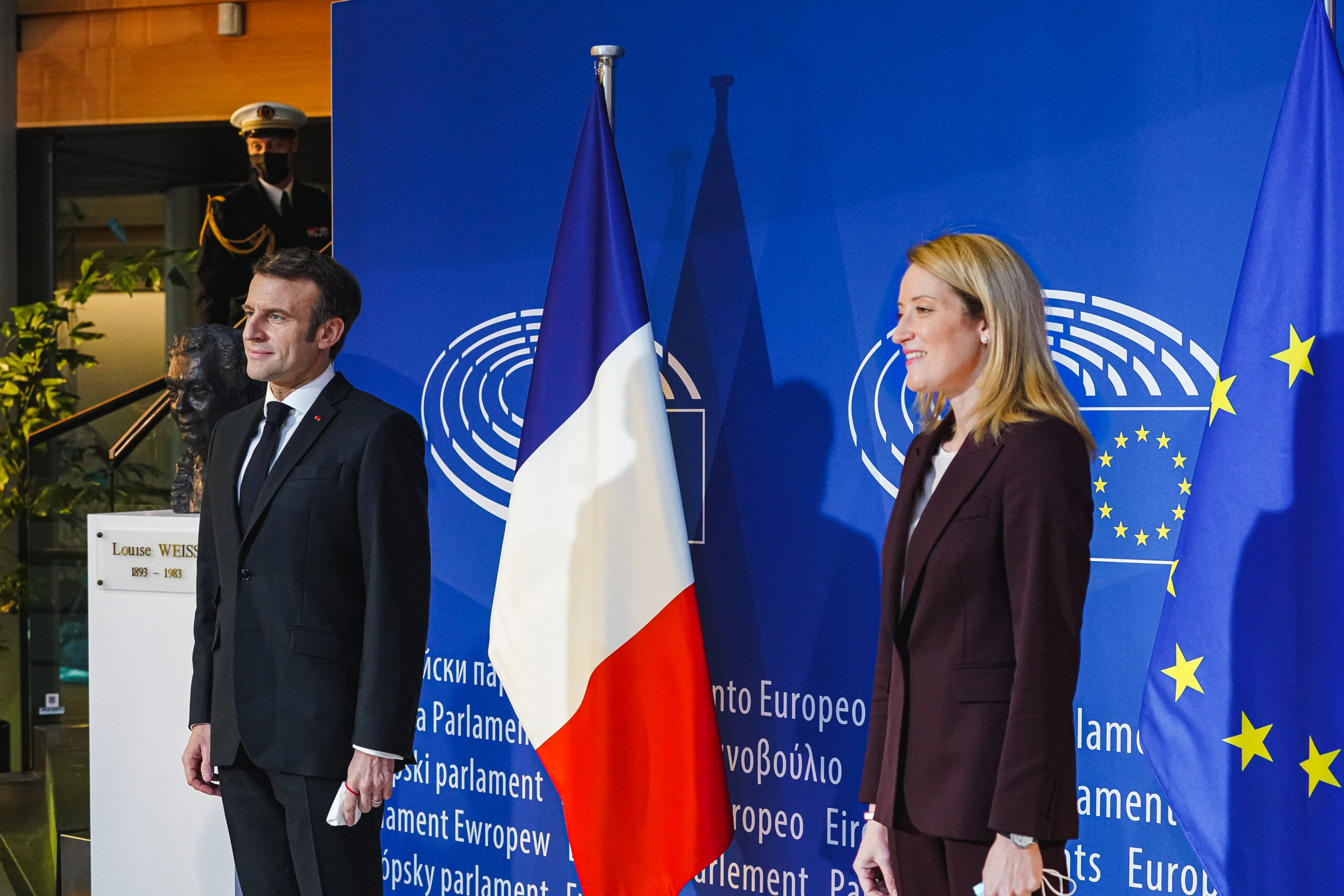
Picture © European Union 2022 – Source: EP
