
When the SDGs were negotiated, the European Council pushed for a “transformative” and “ambitious” post-2015 Agenda. Today, however, almost three years after their adoption, the EU still lacks a proper implementation strategy that gives clear directions and sets priorities for internal and external action.
The paper underlines four key messages for the implementation of the 2030 Agenda:
- The approval of the SDGs was a success for EU diplomacy – but the EU is not taking them as seriously as it should; nor is the EU doing as well as it might think in delivering the SDGs for Europe – though a much better gap analysis is needed.
- The EU should prepare an EU2030 strategy based on the 2030 Agenda and SDGs. As Europe thinks about the SDGs, it must strategise globally, and consider the spill-over effects of internal policy for third countries.
- The next Multi-Annual Financial Framework should integrate the 2030 Agenda and SDGs in all budget headings.
- The prize is a Europe – and a Europe in the world – which meets all three pillars of the SDGs: economic; social; and environmental.
Read the full paper here.
Authors: Tancrède Voituriez, Elisabeth Hege, Giulia Maci and Christine Hackenesch
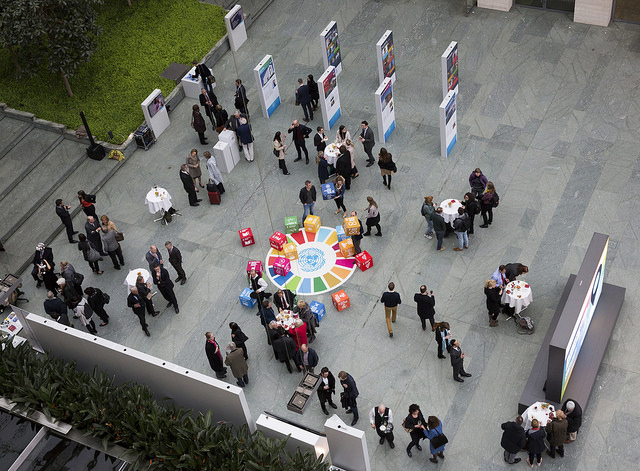
Image courtesy of the UN in Germany via flickr.