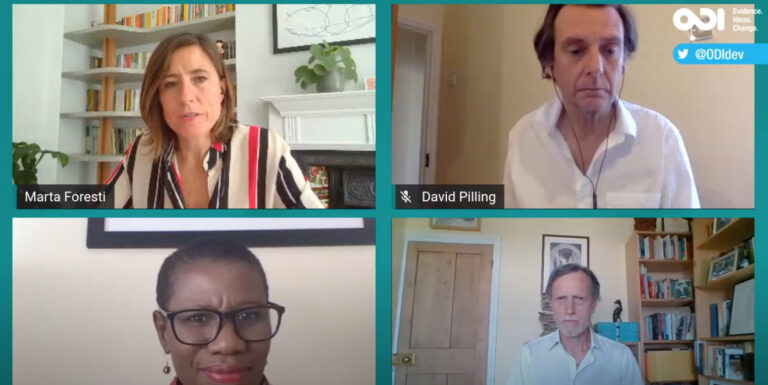
ETTG-ODI webinar event video: Africa beyond Covid-19
ETTG-ODI webinar event video: Africa beyond Covid-19

ETTG-ODI webinar event video: Africa beyond Covid-19

COVID-19 has caused disruptions across the globe on a scale not previously imagined. This brief looks at the consequences of the COVID-19 crisis for conflict-affected areas in Africa, as well as measures taken against the pandemic, which are likely to be even more profound and far-reaching. But as the virus continues to spread, the impact of COVID-19 on ongoing conflicts is still uncertain.

Drawing on lessons from previous health and economic crises, this blog explores five potential impacts of Covid-19 on agriculture, food systems, food security and rural livelihoods in Africa – and how to counter them.

In fragile and conflict-affected settings, Covid-19 is increasing vulnerabilities and tensions caused by unequal access to already strained (and often inexistent) social and medical services. This is particularly true for young people – one in every four of whom live in such areas.

World Bank Group President David Malpass expects the corona crisis to result in a deeper global recession than the Great Depression of the 1930s. The pandemic will hit the world’s poorest countries even harder than industrialised nations, especially as the former have barely any fiscal leeway. Their social-security and healthcare systems are not sufficiently robust.

This note summarises and reflects on the different roles played by the African Union and a sample of the continent’s regional organisations in shaping collective, coordinated regional responses. It finds that the AU has played an effective role in communicating about and shaping African responses, with technical legitimacy provided through the Africa CDC. The AU has also been able to inspire collective action in a unified call for international solidarity.