Publications 

ETTG offers analysis and evidence-based discussions on all aspects of development cooperation. Outputs range from blogs, policy briefs and collective reports to informal takeaways from network events.

European independent think tanks

The six institutes that compose ETTG cover all aspects of international development and cooperation policy.. They share a strong commitment to higher global welfare, and a strong belief in the importance of better collective action to achieve global goals. As think-tanks, and as policy-focused research institutes, they also share a commitment to effective outreach and engagement with policy-makers and policy processes.

Generic selectors
Exact matches only
Search in title
Search in content
Post Type Selectors
Category

Latest

G20 ministerial meetings: high-time for development and finance ministers to work hand in hand for a sustainable global recovery

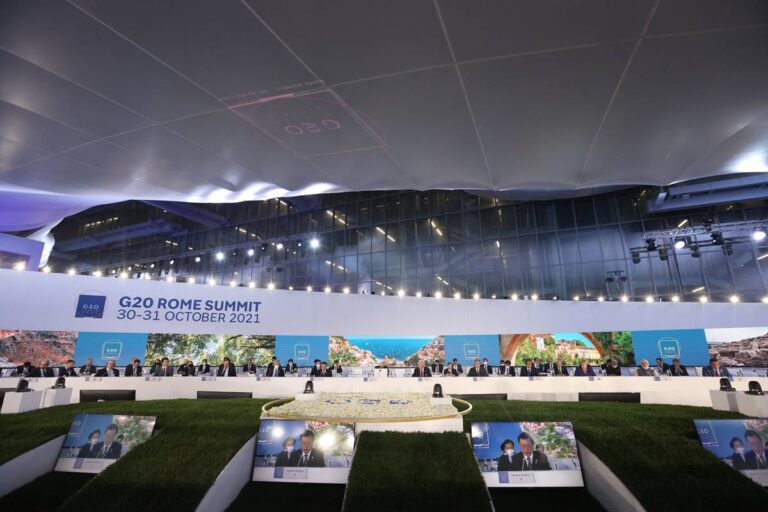
On 29 June, G20 Ministers responsible for development policy convened for the first time under the Italian Presidency. The meeting saw the adoption of a detailed and ambitious policy communique that in addition to prompting international action is also expected to further inform the deliberations of other G20 ‘tracks’ that may affect developing countries. It seems particularly strategic to us that the meeting of Finance Ministers at the end of this week in Venice picks up and further develops on these commitments.

Read more >

Continuity and Change in European Union-Africa Relations on Peace and Security

The European Union (EU) and the African Union (AU) maintain a long-standing partnership on peace and security which can be qualified as constructive. It is largely based on joint interests and objectives and is less contentious compared to other more challenging topics, such as migration and trade. The EU’s new seven-year budget for 2021 – 2027 introduces new ways of working which impact on how the EU will engage on peace and security in Africa. Most notable in this regard is the establishment of the European Peace Facility (EPF) which can potentially undermine the AU’s role in leading and coordinating peace and security measures on the continent. Moreover, these new developments take place against the backdrop of an overall troubled EU-AU relationship which suffers not only from the divergences in interests in key areas such as migration, trade and climate but also from the consequences of the COVID-19 pandemic, and global geopolitics.

Read more >

Programming the NDICI in times of COVID-19: Five takeaways from a recent webinar

The Neighbourhood, Development and International Cooperation Instrument (NDICI) represents a fundamental reform for the European Union (EU)’s development policy, its neighbourhood policy and its external action more broadly. The new instrument will be implemented in a rapidly changing geopolitical context and will have to respond to unprecedented challenges caused by the COVID-19 pandemic. 

Read more >

The 2021 ENP South Communication: A ‘renewed partnership’ but ‘old issues’ remain

The European Commission DG NEAR and the office of the High Representative for Foreign and Security Policy released a new policy statement (‘Communication’) ‘Renewed Partnership with the Southern Neighbourhood: A New Agenda for the Mediterranean’ on 9 February 2021. The Communication was accompanied by a staff working document ‘Renewed Partnership with the Southern Neighbourhood Economic and Investment Plan for the Southern Neighbours’. The priorities outlined in the Communication and the investment Plan are to be concretised during 2021 as the new ‘Neighbourhood, Development and International Cooperation Instrument (NDICI), which will finance the EU’s international cooperation, is programmed during 2021. 

Read more >

EU–Africa Partnership on Migration and Mobility in Light of COVID-19: Perspectives from North Africa

The pandemic not only acts as a multiplier of existing developmental and socioeconomic challenges in Africa – and thereby contributes to increasing
migratory pressure in and out of the continent – but it also reveals interdependencies between Africa and the EU. It is hoped that the current health and socioeconomic crisis would also act as an opportunity to substantially rethink the relations between the two continents on, and well beyond migration.

Read more >

Sign up
for our newsletter 

Scroll to Top