
November, 2025
Authored: Niels Keijzer, Melis Baydag (IDOS)
In today’s geopolitically buzzing and unstable world, what seemed unthinkable one month ago can be old news only weeks later. A small group of powerful states have trumped the post-WW2 global order and openly question the territorial sovereignty of smaller states and the self-determination of its peoples. Amidst their manoeuverings, a rule-based, multilateral system that once promoted stability and apparent co-dependence between nations, big and small, finds itself in crisis.
The global power shifts have put strong pressure on global agendas in the pursuit of the equitable and sustainable provision of global public goods, of which key elements were adopted only ten years ago in the form of the 2030 Agenda on Sustainable Development and the Paris Agreement on Climate Change. While there remains strong support for long-term development cooperation, short-termism, transactionalism and the direct promotion of interests – even, at times, foreign policies on personal needs – are becoming more prevalent in international cooperation discourse and practice. Furthermore, the new type of global competition resulting from such shifts is expressed both in traditional contests of influence and in the return of hot wars, which are intensifying pressures on the global order.
Against this background, the European Think Tanks Group and the German Institute for Development and Sustainability (IDOS) teamed up with the Istanbul Policy Center to organise a public seminar and a closed-door workshop to explore how three key actors – Turkey, the European Union and China – are responding to the above trends and changes. Comparing their current policies, agendas, and past practices provided a means to explore whether their approaches to international cooperation, particularly in the context of their engagements with the Global South, are converging (or diverging) during today’s turbulent times, and to determine the scope and relevance of further comparative research. This blog post highlights some key points of what was discussed and links them to current academic and policy debates.
When thinking of comparing two countries of highly differing size and power with a Union of 27 states, a first and obvious question that arises is whether – empirically – the three represent incomparable apples and oranges, or share more in common than one may think?
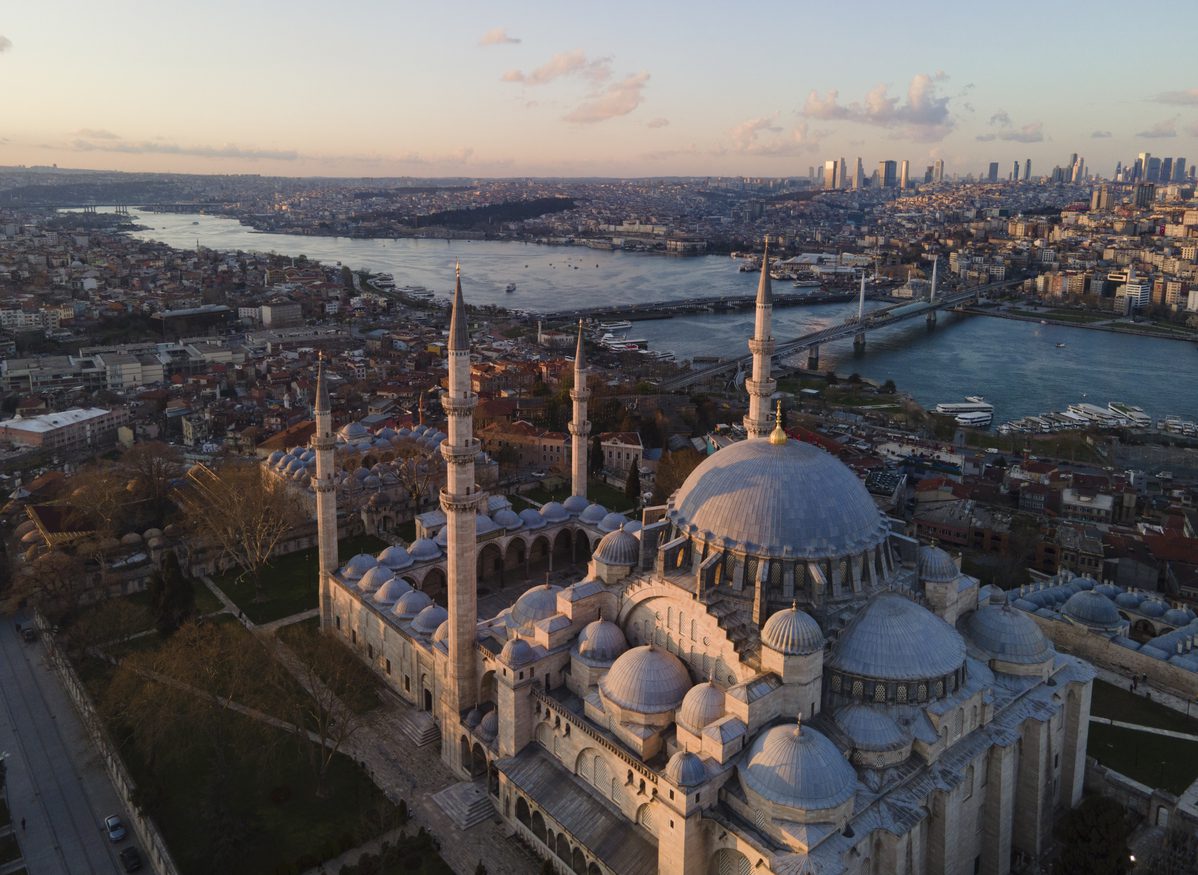
Turkey has positioned itself as a strategically autonomous middle power in a world increasingly defined by polycrisis and instability, such as the war in Ukraine, U.S.-China rivalry, ongoing wars and conflicts in close regions and the erosion of rules-based multilateralism. While this has become more evident with the changing role of the USA in the region, these developments have simultaneously increased transaction costs for middle powers like Turkey, as traditional alliances have become less reliable. Consequently, pragmatic collaborations built on mutual interests have come to play a major role in Turkey’s engagement with the Global South, extending beyond its traditional transatlantic ties. A clear example of Turkey’s engagements is its 44 embassies across Africa established following its commitment 20 years ago, when Turkey announced the “Year of Africa” in 2005 to expand its diplomatic networks. In parallel, Turkey has sought to establish itself as a “new” development actor, with relatively modest contributions compared to the other two players. Despite drawing on ideational emphases in the development cooperation agenda that highlight its cultural and historical closeness, the strategy has been pursued alongside material interests, such as the expansion of Turkish Airlines’ operations on the continent, or the promotion of Istanbul as a conference hub, which has benefited Turkish business interests.
The EU, as a major development actor and proponent of multilateralism, has traditionally framed its engagement in close alignment with the global development agenda and linked to its value- and market-driven interests. However, this approach to engagement has lost political traction in the past few years, both internally in the EU, where more interest-driven cooperation agendas are now emphasised. The recent second Global Gateway Forum on 7-9 October testifies to the EU’s ambition in promoting external investment under this new investment, while its initiative is as nebulous and non-specific as China’s. While it seeks to increasingly profile itself in this area, questions remain on the EU’s commitment to promote the values that inspired its own creation, including its commitment to supporting democratic change. Linked to this, resentments on felt double standards on the part of Global partners affect the EU’s legitimacy and effectiveness.
China, as a rising global power, has rapidly expanded its influence in the Global South through massive infrastructure investments, trade, and a narrative of “win-win” cooperation and formal non-interference in domestic politics. Its approach has prioritized economic development and state-led partnerships, offering an alternative to traditional Western models. It has also raised concerns about the longer-term sustainability of Chinese-funded projects and the fiscal and financial trade-offs, especially for low- and middle-income countries with weaker governance and limited fiscal space. For instance, more and more countries in South East Asia are now facing a cautionary tale about the financial (un)unsustainability of some of the mega-projects launched under the BRI. The Chinese government in part seeks to respond to this critique by placing new emphasis on ‘small and beautiful’ projects.
A first strong difference between the three actors concerns the public debate, awareness of and support for international cooperation and budgets. While international cooperation is typically not a topic for parliamentary scrutiny and public debate in both Turkey and China, in the EU there is considerable – and polarised – debate about the purpose and justification of public budgets dedicated to it.
On the other hand, the EU converges with Turkey and China when it comes to the matter of how it shapes its partnerships. Communicated a good seven years ago under the typically impenetrable EU jargon of ‘geographisation’, the EU has just like China and Turkey started to place a stronger emphasis on promoting bilateral partnership and has de-emphasised cooperation at the regional level. The emphasis on ‘flagship projects’ under the Global Gateway initiative well reflects this changing emphasis. Linked to this, it has also acted in a more interest-driven manner in the area of trade policy and is seeking to link this closer to its investment and energy policies.
In comparing these three international actors, we also need to problematise their ‘actorness’ in the sense of not assuming that they are unitary actors with a homogenous approach to doing things. Turkey has been a fast riser, whereas China has been – given its long-standing relations and cooperation efforts – much inaccurately referred to as an “emerging donor” in earlier decades. The EU, in turn, is not a monolithic actor: it employs different cooperation approaches with different regions, while also many EU member states – despite considerable public spending cuts – maintain large diplomatic networks and cooperation programmes. Discussions during the workshop illustrated how different and diverse the approaches were in different world regions, with specific focus on Africa and Central Asia. While comparing actors is meaningful and policy relevant, such efforts must not simplify their approaches and cloud their internal diversity.
While these are just a few of the issues where comparing the EU, Turkey and China point to interesting trends, commonalities and divergences, one must also be cognisant of the considerable conceptual bias in much of the political science from which we draw when doing so. More concretely, many concepts used – including perhaps the Global South – are Eurocentric and are considered challenging by other international cooperation actors. The concept of the ‘middle power’ has potential and should be further explored in this context – and the nature of the reshaping global order.
The authors would like to thank Pelin Oğuz (IPC), Gülcihan Çiğdem Okan (IPC), Daniele Fattibene (ETTG) and Iliana Olivié (ETTG) for their suggestions on an earlier version of this blog post.