
May, 2026
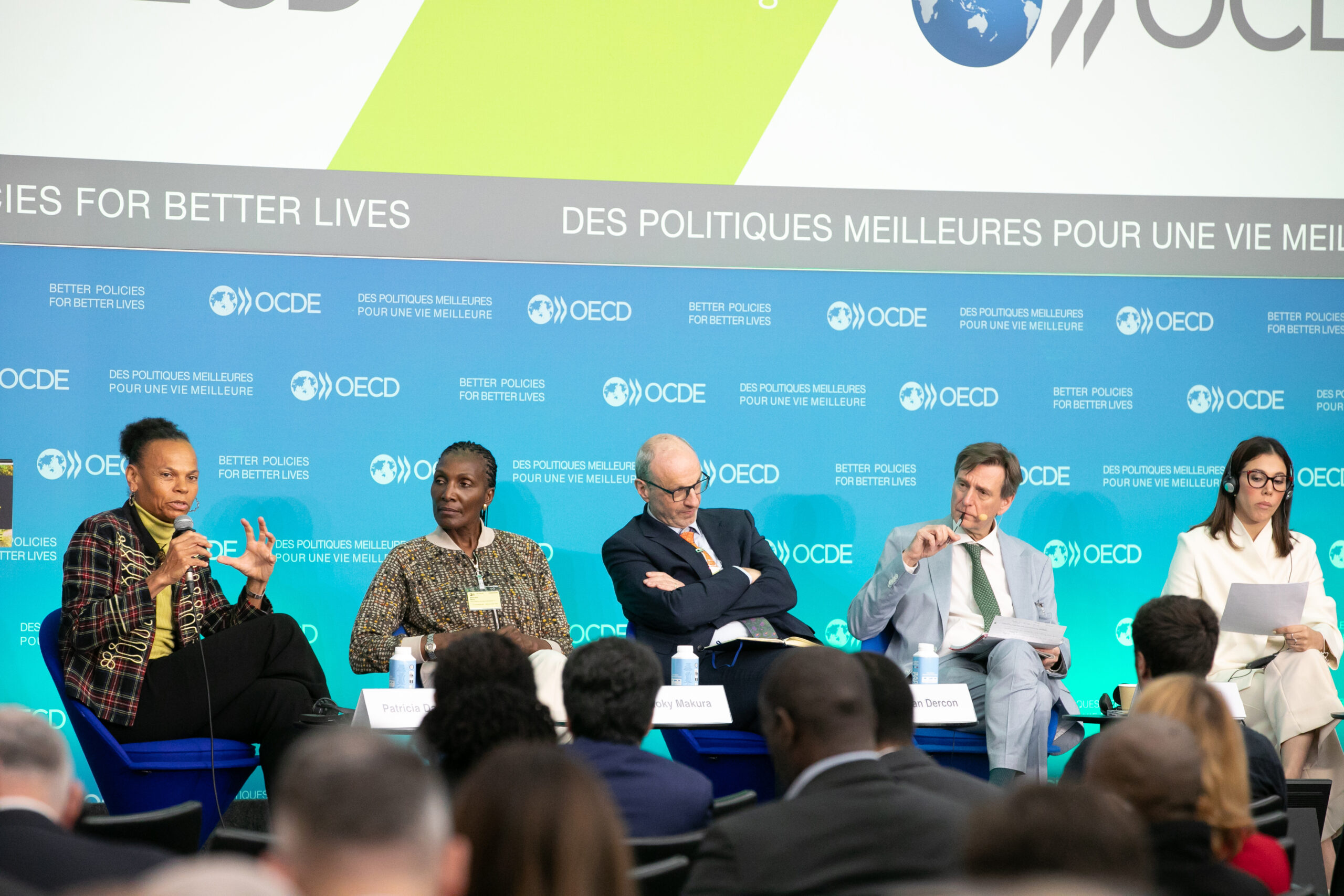
This week, the OECD convened around 500 people in Paris for a much-needed and timely discussion on the future of development co-operation. Recent and drastic cuts in ODA are resulting in a multiplication of these fora. With a gloomy future for aid, development cooperation is being discussed everywhere – from Accra to London – by everyone, from academia to national governments and multilateral organisations. This also comes hand in hand with reform processes such as UN80, the DAC review or the reform of the World Bank, which have also triggered a number of conversations on the role of multilateral system, the evolving capacity of institutions created in the aftermath of the Second World War or during the Cold War, and the competitive dynamics amongst development banks.
The future of development co-operation is still blurred – and will remain so for a while – but we already have some hints as to where it is headed. After all, the Millennium Development Goals were the natural outcome of the social summits of the 1990s, just as the 2030 Agenda emerged from criticisms of the MDGs for being too narrow, too socially focused, and not green enough. In this sense, we can foresee the future of this system by looking at how such conversations are being approached – the participants involved, the agendas discussed – and at the revealed preferences of donors, reflected in their actual behaviour in terms of the scale and geographical and sectoral allocation of aid.
So here are some thoughts on the potential why, what, and how of the international cooperation that is to come.
Why? Because it is in everyone’s interest
For decades, public discourses among traditional donors grounded development policies in the principle of solidarity. This was the case despite the broad consensus in the extensive academic literature on aid allocation and aid effectiveness that aid was largely intended to serve donors’ interests.
Over the last decade, both public discourse and academic analysis have evolved towards a more complex understanding of the motives behind development cooperation. These can broadly be grouped into three categories: addressing partners’ needs (poverty reduction, the fight against hunger, education, etc.); providing common goods, such as global health; and responding to donors’ national interests, ranging from economic returns on investment to security and stability.
This does not necessarily mean that the motivations behind international assistance have changed. Rather, we are becoming more explicit and honest about them, which is arguably a positive development at a time when, alongside multiple global crises, international relations are also facing a growing crisis of trust.
What? Less aid, back to basics, and the investment agenda
The development community is far from reaching a consensus on what the development cooperation of the future should look like. Nevertheless, there are several commonalities in revealed preferences, even among donors with different historical, geographical, and ideological backgrounds.
A lower budget. There is little appetite for aid, at least not at the levels previously seen among the largest traditional donors, which until recently accounted for a substantial share of total ODA. These donors are only a handful of countries – France, Germany, Japan, the UK, and the US – but without the scale of funding they provided over past decades, the development and multilateral system cannot survive in its current form.
Back to basics. Given the scale of the aid cuts undertaken – and those that are still to come –, the development community cannot just simply do a little less of the same things. There is a broad consensus on the need to do less with less – ideally to do better with less, if efficiency gains are indeed possible. Yet, establishing priorities in the current situation is difficult, when all sorts of crises absorb a huge part of aid. Just as an example, Ukraine is, by far, the largest recipient of EU aid. This is also a symptom of the reframing of aid for stability and security purposes. Also, rooted in the common goods approach and with the recent and traumatic experience of the COVID pandemic, global health is also being consolidated as a top priority for major donors.
The investment agenda. We have been talking about the need to mobilise trillions rather than billions of development finance for ages, now. This is a difficult and moving target that requires approaching development finance with the whole of the toolbox, where aid is just a tiny part. It includes trade, investment, fiscal cooperation, domestic resource mobilisation, debt management, remittances and the myriads of institutions and policy spaces and processes that come with them. As for investment, this logic is behind the proliferation of development banks and similar financial mechanisms, such as the US DFC, Romania’s BID, or Spain’s FEDES. It is with this same rationale that the EC launched the Global Gateway initiative.
How? Paris 2.0 plus the whole FfD toolbox
The buzzwords of the aid and development effectiveness agenda are back: ownership, harmonisation, coordination, transparency, accountability. The whole Paris Declaration all over again. The questions arise as to why we are discussing this now and how come this is presented as a new thing, given that the declaration is more than 20 years old. The quick answer to these questions is that Paris was never really implemented, for at least two reasons. On the one hand, Paris was based on the false premise that development assistance was meant solely for meeting recipient countries’ needs in the most effective way – a myopic approach to donors’ motivations. On the other hand, donors did not really need to meet Paris principles. In other words, aid could go on in a rather vertical fashion, with donors’ agendas, priorities, institutions and processes providing the framework and starting point for aid programs and projects. The reason why it might be (slightly) different this time around is that traditional donors may now have no other choice. As discussed in every development forum, the Global South has gained sovereignty, agency and independence as a result of both its increased economic and political weight and its larger menu of options when it comes to development partners, with an increasing number of non-traditional donors engaging in aid-like activities.
What comes next?
In the short term, there will likely be more much-needed discussions and probably not too much in terms of tangible institutional change. According to several speakers at the conference, both the UN80 and the DAC reform processes are somewhat disappointing. Too little, too late. Or maybe too little, too soon. The crisis of the development system is far from over. Without a clear idea of what the actual scale of the system will be in the coming decades, it is difficult to adjust the institutions and the ends to the means available.
Meanwhile, with a shared diagnosis, discussions will need to be oriented towards the practicalities of the (re)foundation of the development system. To take just one example, it is now widely acknowledged that, for decades, the Liberal system of development cooperation was in fact driven by a Realist behaviour of competition amongst its members. In the current context of explicit geopolitical fragmentation, the question arises as to why countries would move towards a more collaborative and coordinated approach. This is particularly relevant given that one of the reasons behind the Global South’s greater levels of agency is the increased competition amongst traditional and non-traditional donors.
Authored by Iliana Olivié (ETTG Director)
Picture credits: @OECD