
By Patryk Kugiel, reviewed by Sophie Desmidt (ECDPM), Jago Salmon (ODI Global), Julian Bergmann (IDOS), Daniele Fattibene (ETTG) and Iliana Olivié (ETTG) | July 29, 2025
Key messages: The more volatile and unpredictable international environment demands an updated, comprehensive and realistic EU response to a situation of fragility in developing countries. New Council Conclusions could reposition resilience-building in the centre of European response to fragility and generate political will to respond properly to mounting challenges. It would renew the EU’s commitment to development, coordinate different tools and players, bridge the divisions between Eastern European and Global South partners, and restore European credibility as a development partner.
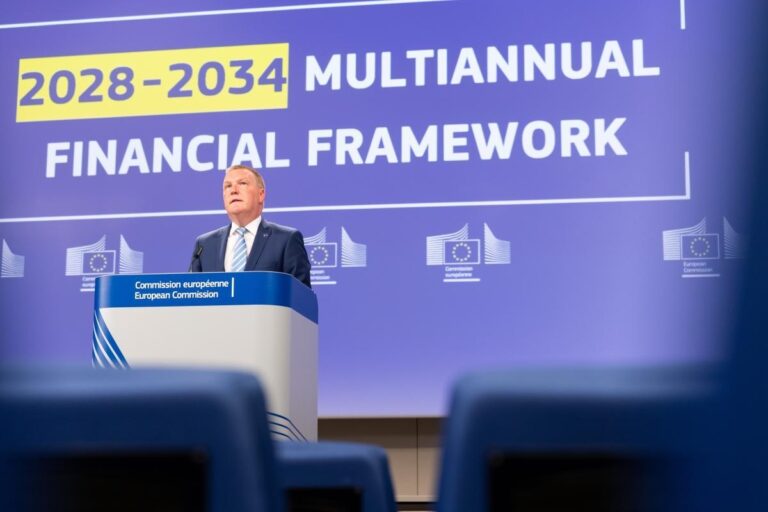
The EU development and international cooperation policy has focused on building resilience for a long time. Although it was first strategically evaluated in the 2012 Communication from the Commission in the context of the food security crises in Africa, and then found a concrete example in the establishment of the EU Emergency Trust Fund for Africa in 2015, the legal basis for its mainstreaming in external action can be found in the Article 21 of the Treaty of the European Union (TEU). With the new European Commission, in the December 2024 mission letter from Ursula von der Leyen to Hadja Lahbib, the Commissioner for Preparedness and Crisis Management, was instructed to “work with other Members of College on a Commission-wide integrated approach to fragility, ensuring that humanitarian, development, peace and other policies all work together to better link urgent relief and longer-term solutions.” Poland’s Presidency of the European Council in the first half of 2025 tried to push for a new Council Conclusions on resilience, but unfortunately with no success. Despite this lack of consensus, the upcoming negotiations on the future Multiannual Financial Framework 2028 – 2034 (MFF), where the EU will carve out its next instruments and strategy for its external engagement, including in fragile settings, offer the right moment to carry such a task forward. As the world has become more fragile, with resilience and fragility proving to be two sides of the same coin, and the international context around the EU has deteriorated further, the EU’s approach to resilience requires a strategic update.
A new EU resilience strategy for a more fragile world?
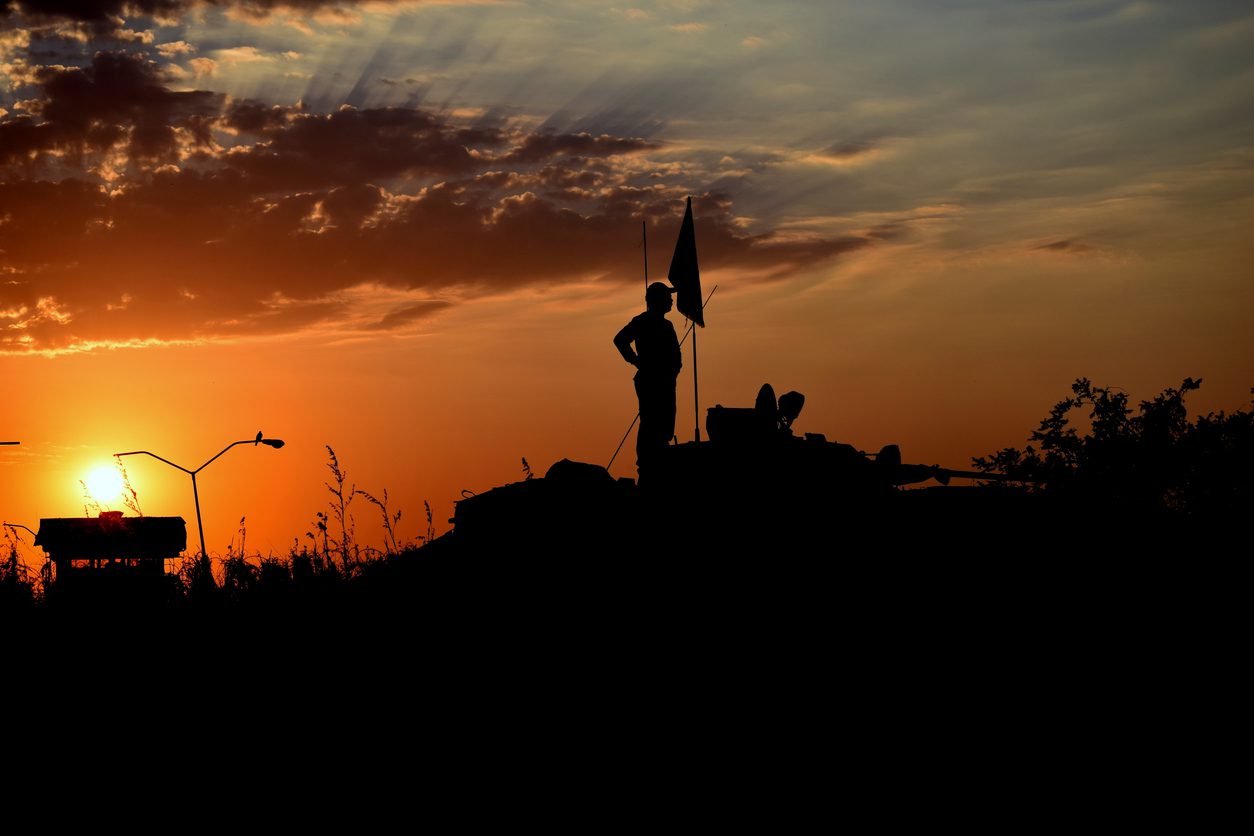
In 2017, when the last Council Conclusions on resilience and a Joint Communication on “A Strategic Approach to Resilience in the EU’s External Action” were adopted, there was no war in the EU’s immediate neighbourhood and no pandemic like the COVID-19 one, which pushed hundreds of millions of people back into poverty and more states into serious debt distress. Since then, however, fragility and conflict have increased globally.The latest OECD report suggests that the number of people living in fragile contexts has risen by a remarkable 500 million, from 1.6 billion to 2.1 billion in 61 countries in 2024. In addition, the number of state-based conflicts is the highest (61) since the end of the Second World War while 2024 was the fourth most violent year since the end of the Cold War, according to the Uppsala Conflict Data Programme. Finally, the number of fatalities in armed conflicts in 2021-2023 reached its peak since the end of the Cold War.
Since then, the EU has also evolved its instruments of development assistance. With the introduction of new strategy and policy tools, the Global Gateway strategy in 2021 and Team Europe approach in 2020 make a re-evaluation of the resilience strategy a very timely exercise. For these reasons, in April 2024 ETTG convened an event with all Member States in Warsaw to discuss fragility and resilience. The discussions were key to identifying resilience as a key starting point to strengthen the EU’s international partnerships agenda, by addressing a few outstanding bottlenecks.
Addressing fragility to strengthen resilience
While Western Europeans want to discuss the fragility of the poorest states, Eastern members focus more on the resilience of middle-income countries. In reality, however, this juxtaposition is misleading. Fragility and resilience are complementary concepts, two sides of the same coin. Using a metaphor, while fragility can be seen as the disease affecting many countries, resilience is the cure. There is clear agreement that the EU needs long-term partnerships to reduce the risks of fragility, and that EU strategies such as Global Gateway and tools like NDICI-Global Europe or humanitarian assistance must work coherently towards building resilience in different contexts.
More for less?
In a resource-constrained global environment, key partners of the EU are increasingly focusing on selective engagement and geographic prioritisation. With ODA budgets shrinking, many in the EU would prefer to repeat the diplomatic mantra of ‘doing more with less’. However, this kind of rhetoric will only feed up unrealistic expectations and ultimately lead to disappointment and frustration with the EU in partner countries. In reality, Europe must accept that it can only ‘do less with less’. To better manage expectations and escape the pattern of ‘overpromising and underperforming’, Europe must accept its limitations. It will need to target its limited resources more effectively, making strategic choices about key regions and sectors. While Europe must learn the difficult art of prioritisation, it also needs a strategic vision to guide its actions.
East or South?
Discussions also addressed the question of geographical focus. Should the EU invest more in resilience in the Sahel, the Middle East, or the Eastern Neighbourhood? While humanitarian assistance must be driven solely by humanitarian needs, development aid may not escape the dictum of geography. In order to prove that it is capable of being a geopolitical player, the EU must make hard choices and direct its assistance to places where it has strategic and political interests. As geography matters, it is just natural that the EU’s Eastern neighbourhood and North Africa will receive special attention. Yet, the EU should carve out a tailored toolbox for each region matching different needs of its partners. All of them – from humanitarian assistance to Global Gateway, to trade or military missions must work in unison to strengthen the resilience of our partners. The question of priority allocation is closely tied to the next strategic dilemma concerning available resources.
Strategic vision or pragmatic approach?
As the international context changes, the EU must redefine its role as a development actor and set new priorities. Since 2007, the EU has layered instruments and operational approaches, as well as thematic priorities. As the largest donor of ODA, this is an opportunity to restate EU values of solidarity and cooperation as the basis for its support to resilience. However, it must clearly define its principles to avoid confusion among its own constituencies and partners. The EU needs to demonstrate how a smaller ODA can bolster resilience in the least developed countries and fragile states, while leveraging investments in other regions through the Global Gateway initiative. It must decide when and how to collaborate with other donors, including those that are not like-minded, where necessary. It requires a pragmatic approach based on a realistic assessment. Discussions on the next MFF, in the context of shrinking aid, might be the best opportunity to establish a new vision for EU external action, with an appropriate role for development assistance.
Way forward: Mainstreaming resilience
As advocated in the 2024 Niinisto report, Europe could demonstrate the principle of ‘mutual resilience’, whereby the resilience of our partners also serves EU interests. Building resilience is not just a buzzword or a new trend in development discussions. It is a necessity for both developed and developing countries across the globe. It could also help the EU to present a modern narrative on global development cooperation. It could replace the outdated focus on poverty eradication by combining the traditional development goals enshrined in the Lisbon Treaty (Article 208) with the Commission’s interest-driven development cooperation. This is the right way to support states and societies, strengthen the resilience of democracies against foreign interference and manipulation, and improve preparedness for natural disasters and other shocks.
Therefore, while the final text of the Council Conclusions on resilience is being negotiated by Member States, now is the right moment to break the deadlock. While the EU made remarkable progress in strengthening its internal resilience and preparedness to external shocks since the COVID-19, it is time to focus more on supporting the resilience of our partners.
By adopting a new resilience strategy, the EU can buy it all European players in the joint effort and demonstrate its ongoing commitment to global partnerships and assure developing countries of its continued support for their progress. By setting a new direction, the EU can regain the trust of its partners and overcome the divisions between humanitarian aid and development aid by adopting a new, integrated approach focused on responding to external fragilities and strengthening the resilience of the most fragile states.
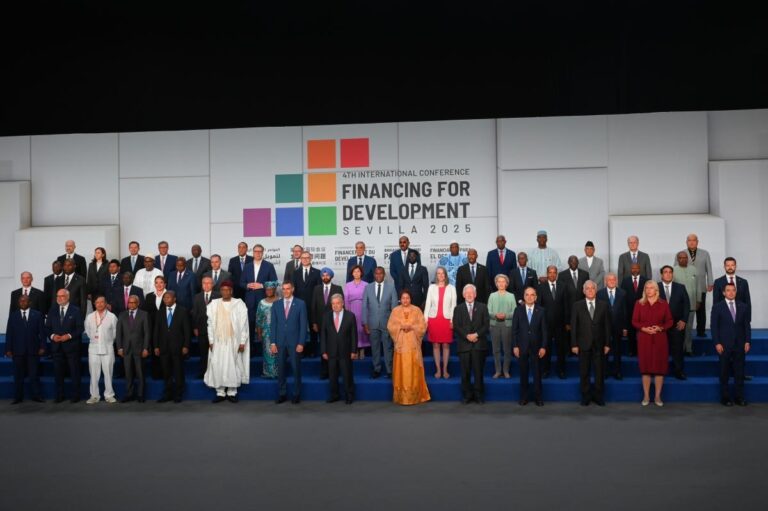
The EU’s approach must be pragmatic and realistic, even if less ambitious. This must be based on a clear strategic vision and prioritisation of actions. This would help guide the EU through discussions on financing for development and future negotiations on the next MFF.