
By Daniele Fattibene, ETTG Coordinator | July 25, 2025
Introduction: The MFF as a Geopolitical Barometer
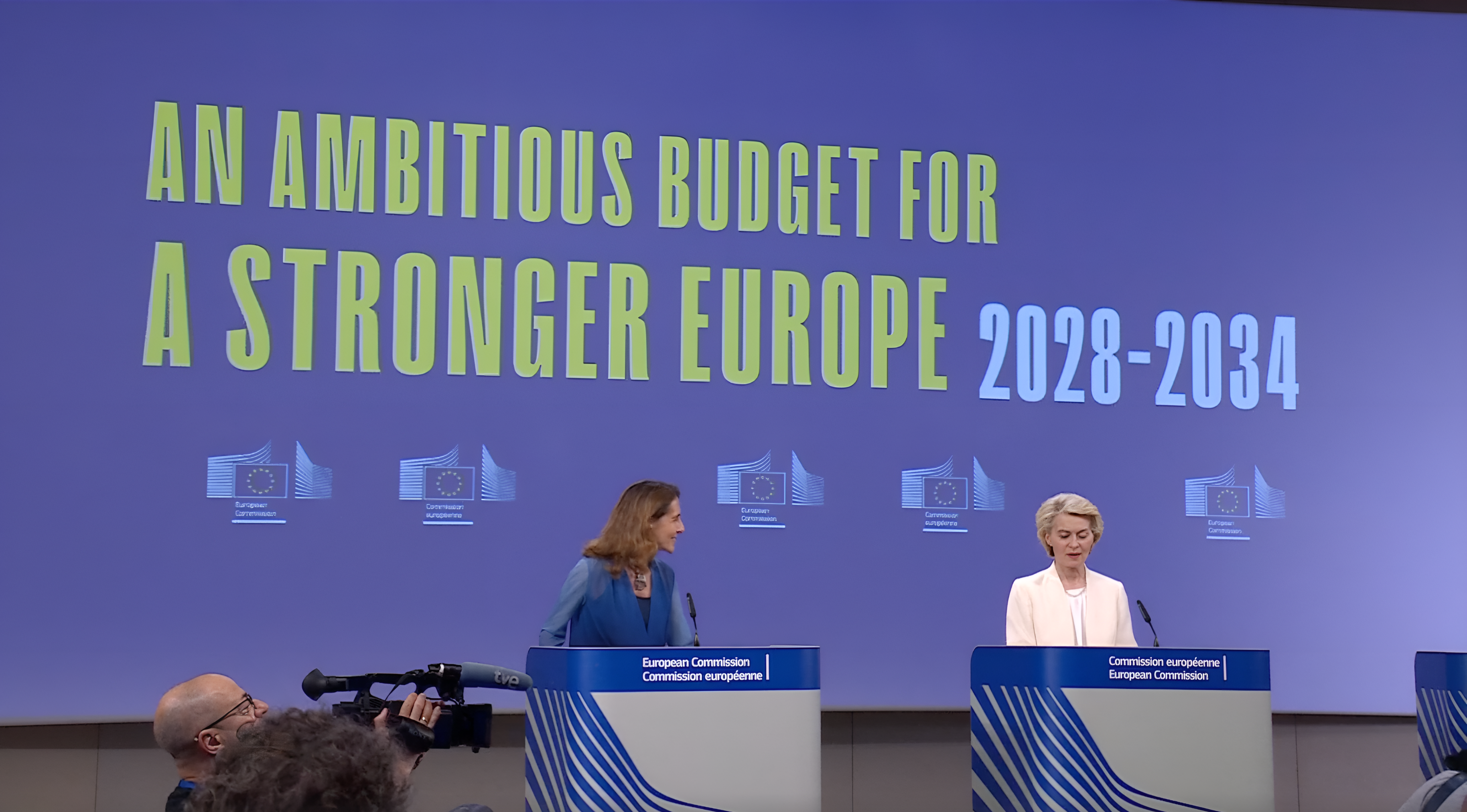
The European Union’s Multiannual Financial Framework (MFF) is more than a budget: it not only marks the EU’s political priorities, but also its level of ambition to be a truly global player. With the current MFF ending in 2027, negotiations for the next 2028-2034 framework are unfolding amidst profound geopolitical instability, economic competitiveness concerns, and a pressing need for more defence spending and strategic autonomy. The European Commission’s €2 trillion proposal would lead to an increase up to 1.26 percent of gross national income, compared with around 1.1 percent over the current MFF. Yet, convincing the EU Members, especially net contributors (e.g. Austria, Finland, Germany, Sweden, the Netherlands among others) collectively to pay €1.2 trillion will not be an easy task.
A central, though contentious debate will emerge on the external heading of the next EU budget. This involves balancing traditional development principles linked to the global public goods agenda — poverty eradication, human rights, sustainable development — with emerging strategic interests like migration management, security, defence, and competitiveness. Although the EU Commission’s proposal to invest €200 billion in the EU’s external action budget is good news considering the global turmoil, for several Civil Society Organizations the proposed new architecture could lead to trade-offs between short-term political priorities and long-term development. This is particularly crucial in a context where ODA from the 27 EU members is declining and is still far from reaching the needs and demands recently reaffirmed in the Fourth International Conference on Financing for Development (FFD4) in Sevilla. However, it will be a mistake to weigh the ambitions of the next MFF by only looking at its external action heading, as the EU’s international development and humanitarian efforts are increasingly intertwined with other priorities.
Repaying the NextGeneration EU and the debate on “own resources”
Adopting the next MFF will not be smooth sailing, as it will require unanimity in the Council as well as consent of the European Parliament, where Von der Leyen started to creak recently. The Commission aims to reach an agreement before January 2028, though historical precedents suggest that delays are very likely. What is certain is that the upcoming MFF will face severe financial pressures. For example, studies show that the non-negotiable repayment of the NextGenerationEU borrowing starting in 2028 could consume up to 17% of average MFF outlays. In addition, the calls for increased investment in European Public Goods that are deemed essential for its strategic autonomy such as defence, clean energy and research will trigger further internal political frictions. Against this backdrop, Civil Society Organizations warn that although the Commission’s proposals to raise new “own resources” is a good starting point, these new rules should be applied in a way that does not come at the expense of established, large-scale headings like cohesion and agriculture. Finally, there are growing concerns that the increasing centralization of governmental tasks at the EU level (the so called administrative federalism) and a progressive shift towards a more performance-based disbursement methodology could potentially reduce Member States’ autonomy in specific spending areas, leading to a potential loss of regional and local autonomy and the dilution of place-based approaches.
NDICI-Global Europe: Development Aid or Geopolitical Tool?
The Neighbourhood, Development and International Cooperation Instrument (NDICI) – ‘Global Europe’ has been so far the EU’s primary external action instrument, allocating €79.5 billion for 2021-2027 in current prices for several thematic priorities, including poverty eradication, sustainable development, and upholding EU values, explicitly contributing to the SDGs and the implementation of the Paris Agreements. The EU Commission’s proposal to invest €200 billion in the EU’s external action budget represents a good opportunity to bring positive changes.
While several Member States have increasingly supported the architecture of the NDICI-Global Europe, this policy instrument has also faced sharp criticism concerning the instrumentalization of development aid. Reports indicate that funding was too conditioned on partner countries’ cooperation with EU migration policies, fuelling concerns that aid has been “tarnished by EU migration politics“, by prioritising contingent domestic migration concerns over long-term development objectives, while compromising aid effectiveness and recipient-country ownership. In addition to this, studies showed a shift towards a more “transactional political climate” where the traditional narrative of solidarity for international development progressively lost resonance over the need to serve EU strategic interests, eroding the EU’s credibility and diplomatic influence with its global partners.
Humanitarian Assistance: Underfunded and Politicized?
The polycrises have shown how vital humanitarian assistance is for the EU’s external action. The Emergency Aid Reserve, now integrated into the Solidarity and Emergency Aid Reserve, is a special instrument designed to provide additional spending to cover emergency situations arising from major natural disasters or public health crises within Member States and accession countries. Furthermore, it extends support to non-EU countries facing emerging needs stemming from conflicts, global refugee crises, or worsening natural disasters exacerbated by climate change.
However, various reports have claimed that severe underfunding starkly contradicted the EU’s self-identification as a global humanitarian leader, showing that the EU’s financial commitment was not keeping pace with the multiplication and intensification of global crises and needs. In the current MFF only approximately 1% of the EU’s current long-term budget is allocated to this area. In addition, in 2024 only 45.5% of the required $49.6 billion for global humanitarian action was funded. This is why the European Parliament has called for “ring-fencing” the EU’s crisis-response capacities, including humanitarian aid, within the overall budget, advocating for an ambitious MFF that moves beyond the outdated 1% GNI cap and includes robust parliamentary accountability, effective crisis-response mechanisms, and strong conditionality on the rule of law.
Looking at synergies across various headings
If the MFF is the geopolitical barometer of the EU’s global ambition, it will be essential to assess the EU’s international development and humanitarian efforts looking at the intersections with other policy priorities and instruments that are currently included under other MFF headings and which generate positive or negative spillovers. First, on migration the current Heading 4 (with an allocation of €25.7 billion) explicitly links NDICI funding to partner countries’ migration cooperation. While this shows that development cooperation can be directly influenced by, or explicitly linked to, efforts to manage migratory flows, this could also potentially divert funds from traditional development objectives.
Second, security and defence (Heading 5) have turned into an increasingly strategic area, with €14.9 billion in the current MFF, and with defence funding now visibly integrated into the EU budget. While increased defence spending is considered crucial for safeguarding EU values, peace, and security, a discussion exists regarding its impact on broader peacebuilding and development efforts. On the one hand, some argue for a “fully-fledged European Defence Union” capable of conducting peacekeeping, humanitarian, and peacebuilding operations globally. On the other hand, the European Parliament expressed concern that increased defence spending might come “at the expense of social and environmental spending”, potentially creating trade-offs with traditional development and peacebuilding initiatives.
Third, some studies on climate action show that the “external dimension” of the Green Deal did support the promotion of sustainable recovery in partner countries. Therefore, since the NDICI-Global Europe instrument explicitly dedicated 30% of its budget to combating climate change, there are calls to maintain at least a 30% climate spending target in the next MFF, with equitable support for mitigation, adaptation, and addressing loss and damage.
Fourth, on health and research, the EU’s Global Health Strategy and programs like EU4Health are increasingly aligned with broader defence and preparedness agendas, acknowledging that resilient health systems are critical in crisis scenarios. Investments in R&I are vital for competitiveness, but the focus risks prioritizing EU interests over global health equity.
Finally, on rule of law, while the European Parliament insists on “smart conditionality mechanisms” for access to funds, the increasing application of conditionality across various MFF headings, particularly when tied to internal EU concerns like migration control, risks generating a conditionality overload that could alienate partners, and rendering EU cooperation less attractive compared to other global actors offering less conditional support.
Navigating three critical debates
The discussions surrounding the next MFF reveal at least three critical debates that will fundamentally shape the EU’s approach to international development cooperation and humanitarian assistance. First, the next MFF will have to address the core tension between an “interest-driven and geostrategic” external action (focused on defence, migration, and competitiveness) against the EU’s traditional role as a “principled global actor” committed to poverty eradication and human rights. The Global Gateway shows that the competitiveness imperative remains crucial for the current EU Commission, reframing traditional development aid through an economic lens, shifting its emphasis from poverty reduction to market access or supply chain resilience.
Second, the next MFF will have to find a compromise to address the old-new debate between flexibility versus predictability. While the unprecedented number of crises burst in the past seven years consolidate the importance of keeping a more and more flexible EU budget, civil society organizations voice that such an increased flexibility should complement, rather than simply replace, predictability. Predictable, long-term funding is crucial for sustainable development, peacebuilding, and addressing root causes of poverty and inequality. This is particularly true for Least Developed Countries and Fragile and Conflict-Affected States, which currently receive a disproportionately low share of EU ODA.
Finally, there are widespread calls for a significantly more ambitious and effective MFF, necessitating new “own resources” that go beyond traditional GNI-based contributions (e.g. from the Emissions Trading System, the Carbon Border Adjustment Mechanism, new taxation schemes) and avoid over-reliance on national contributions. Drawing on the model of the EFSD+, representatives of the private sector voice that leveraging private investments over increased public spending or business taxation will be very important, along with the simplification of access to funds to fully mobilise private investment, including in fragile settings. In this sense, the Commission’s proposal for strengthened “performance-based funding” in cohesion policy indicates a move towards a more results-driven approach.
Reactions from some EU Member States
While it is too early to assess the official positions of the EU members on the Commission’s July proposal, some preliminary interviews conducted in June and July outline some potential scenarios for Belgium, Germany, Spain and the Netherlands. As a general remark, it would be very challenging for the European Commission to overcome members’ reservations (Germany, France, the frugals) to increase their contributions for the MFF, squeezed as it is by a soaring deficit and ballooning debt.
For Belgium, the Flanders’ Government key priorities for the next MFF call for a next EU budget focused on competitiveness, innovation, security, and strategic autonomy. On the external action, the document highlights the need for strengthened international partnerships, promoting European values and leveraging private investment, as well as for a predictable, transparent, and rules-based funding for development, peacebuilding, fragility (with a strong role played by ENABEL) and civil society engagement.
For Germany, the coalition agreement confirms the country’s expectations for a budget that fully equips the EU to play a proactive geopolitical role, forging European security and defense capabilities and the EU’s competitiveness. While financing outside the EU budget will remain an exception, this does not mean that Germany will not push for a simpler, more transparent and more flexible MFF. Finally, Germany will likely not oppose the idea of a separate (but limited) envelope for the Global Gateway, with ODA leveraging private sector and investments – similar to what EFSD+ is doing now. However, a larger portion of ODA should still be dedicated to more ‘genuine’ development, with focus on human development and Least Developed Countries.
Spain supports an increase in the structural funding provided by Member States for the common budget, as well as for focusing on strengthening an (open) strategic autonomy and for the generation of the EU’s own resources, for instance by issuing joint debt. Madrid calls for an ambitious external action agenda, one that does not neglect the needs of and commitments made to Global South partners and that maintains a high ODA component to ensure enough resources are dedicated to development goals. In this sense, Spain is also voicing a stronger member States’ role in the external action governance through an enhanced participation of the Council in the decision-making processes. In order to do this, it is likely that Madrid would opt for the creation of specific instruments that are targeted at different goals, rather than pushing for a merger of NDICI with pre-accession or humanitarian assistance, as this may jeopardize the commitment to the distinctive objectives of each instrument, and compromise the share of resources that have to be computed as ODA.
Finally, the Dutch Government’s letter to the Parliament, as well as the annotated agenda for the FAC-DEV meeting of 26 May 2025 highlight that the country will support a realistic, efficient, and future-proof EU budget, with a strong focus on strategic priorities such as competitiveness, security, and migration. While supporting a simpler and more flexible budget, The Hague will likely put a clear emphasis on budgetary discipline and fiscal responsibility, limiting the growth of national contributions and opposing the issuing of new common EU debt. Hence, the Government will likely support the Commission’s attempt to link funding to “national plans” (i.e. reforms and results) as outlined in the Recovery and Resilience Plan. Finally, on the external heading, it is likely that the Netherlands will prioritise migration, trade (with Global Gateway supposed to serve both European and Dutch instruments) and stability, whereas humanitarian aid should remain needs-based and principles-driven, and not be instrumentalised for political ends.
Forging a Coherent, Impactful, and Principled Global Role
The upcoming MFF presents the EU with the complex task of reconciling internal demands (i.e. competitiveness, Next Generation EU repayments, strategic autonomy) with escalating geopolitical pressures and the imperative to sustain its global role as a principled and reliable development actor. Keeping a strong and flexible external budget, looking for new narratives, is not a luxury but a strategic necessity. Sustaining the global public goods agenda underpins the EU’s security, diplomacy, partnerships, and crisis response. The EU’s internal prosperity and external influence are inextricably linked; a retreat from global engagement carries significant long-term costs.The negotiation process, demanding unanimity, will test the EU’s capacity to overcome internal divisions and break out of the siloed nature of MFF negotiations. A failure to achieve a consensual and ambitious MFF risks internal fragmentation and diminished external standing. Crucially, the EU must articulate a new, compelling “grand narrative” for its external action. This narrative must bridge the perceived gap between values and interests, effectively communicating the long-term benefits of global engagement to its own citizens. Without such a renewed narrative, external action risks being perceived as a “luxury” and vulnerable to budget cuts, ultimately undermining the EU’s ambition to be a leading global player. Aid and development are not only powerful instruments for global wellbeing but also serve as a strategic lever for the EU’s economic prosperity.
Featured image credits: European Commission (2025). MFF mid-term review: opening statement by Johannes HAHN. European Commission Audiovisual Service. Retrieved July 25, 2025, from https://audiovisual.ec.europa.eu/en/video/I-274976
